
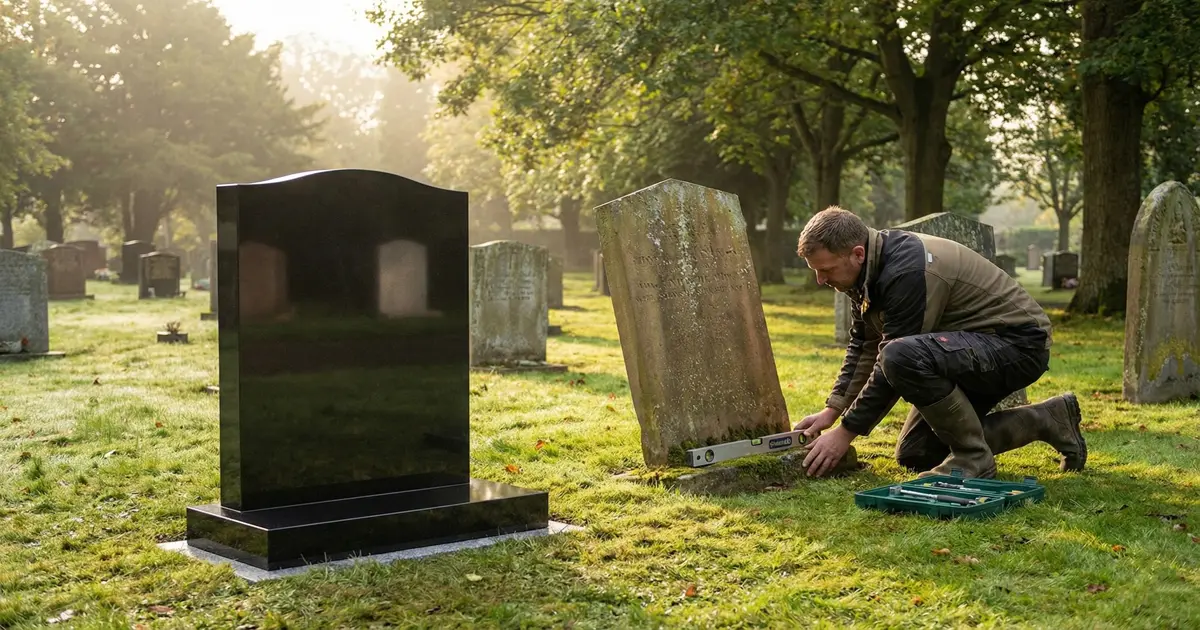
When a memorial is first installed, most families assume the cemetery or churchyard will look after it. It feels like a natural assumption. The memorial sits on their grounds, and their staff cut the grass and maintain the paths. Yet this is one of the biggest areas of confusion, and it often causes anxiety later on.
In the UK, memorials are private property. This means the family, or the grave owner, is responsible for the care, cleaning, and long term maintenance of the memorial. Cemeteries maintain the grounds, not the headstone. It’s understandable that this feels unclear at first, especially when you are already dealing with loss.
Sebastian and Mario at Lincolnshire Memorials spend a lot of time supporting families through this exact situation. Their work, shown throughout the restoration, cleaning, and repair services they provide, gives them a clear view of the questions people ask and the worries they carry. This guide answers those questions, with practical advice that helps you take care of your loved one’s memorial in a way that is safe, respectful and manageable.
Understanding Who Maintains What
What cemeteries look after
Local authorities and churchyard teams look after shared areas. That includes:
- Cutting the grass
- Trimming hedges and trees
- Maintaining boundaries and paths
- Carrying out routine safety inspections
They do not clean, repair, re-fix or maintain individual memorials. Those tasks fall outside the responsibilities of cemetery staff.
This is confirmed in most council regulations across the UK. For example, North East Lincolnshire Council’s cemetery management rules make it clear that memorials remain the responsibility of the owner, including repairs and safety compliance. You can read their guidance here opens in a new tab, .
What families are responsible for
The memorial belongs to the grave owner. Families are usually responsible for:
- Checking for movement, leaning or loose parts
- General light cleaning, if they feel comfortable doing so
- Reporting any sudden damage
- Arranging professional repairs or restoration work
- Managing planting or personal items placed on the plot
This applies across both cemeteries and churchyards.
Families don’t need to carry out physical repairs themselves. In fact, they shouldn’t. Anything beyond light cleaning should be completed by a qualified memorial mason.
Why Councils Carry Out Safety Inspections
Councils and churchyards carry out safety testing for one reason: public protection. A tall memorial that becomes unstable can be dangerous, especially in busy cemeteries.
If a memorial fails a safety check, the council may:
- Lay it flat
- Support it with a wooden stake
- Tape or cordon the area
- Place a notice on the memorial
This can feel upsetting. Many families think the memorial has been damaged or that the mason has done something wrong. In reality, ground movement, weathering and time all affect stability.
Councils do not repair or restore memorials. They notify the family so a qualified mason can make the memorial safe again. Lincolnshire Memorials follow NAMM guidelines and are listed on the BRAMM register, which means their installations and repairs meet recognised national standards.
For families who want to understand these guidelines, NAMM provides published safety information opens in a new tab.
Common Concerns Families Have (And How to Handle Them)
“The memorial looks dirty. Does that mean something is wrong?”
No. Weathering happens to every memorial. Rain, moss, lichen and air pollution all leave marks over time. Granite, marble and sandstone weather at different speeds. This is normal.
Lincolnshire Memorials offer specialist cleaning for all stone types, with careful methods that protect the stone’s surface and integrity.
“The gravestone is leaning. Does that mean it was fitted incorrectly?”
In most cases, no. Soil settlement is the most common cause. Older churchyards, clay soil and winter weather all contribute. A fitted memorial can shift even when installed correctly.
A professional mason can assess whether the movement is slow and natural or sudden and unsafe.
“The lettering has faded quicker than we expected.”
Inscriptions can fade for several reasons:
- Weather exposure
- Stone type
- Depth of original cut
- Painted or gilded finish
Stone surfaces behave differently, and every cemetery has its own climate. Lincolnshire Memorials provide re-cutting and inscription work when the lettering needs refreshing, which is a normal part of long term care.
“We want to clean it, but we are worried about causing damage.”
This fear is common and understandable.
Families can carry out gentle cleaning using water and a soft brush. Anything involving chemicals, heavy staining or biological growth is better left to a mason.
Incorrect cleaning, especially with bleach or abrasive pads, can permanently damage certain stones, particularly marble.
The National Heritage advice notes similar cautions for historic stonework. See:
https://historicengland.org.uk/advice/caring-for-heritage/stone-maintenance/ opens in a new tab
How to Create a Simple Memorial Care Routine
Most families prefer a light, manageable approach rather than constant upkeep. A small routine helps you spot issues early without feeling overwhelmed.
1. Check the memorial once or twice a year
Look for:
- Leaning or movement
- Cracks or chips
- Worn lettering
- Water pooling around the base
- Growths or heavy soiling
Make a quick note so you can decide if anything needs attention.
2. Keep the area tidy if the cemetery allows it
Different cemeteries have different rules. Some allow planting, others allow only removable pots or vases. Lincolnshire Memorials offer a wide range of vases, desks and wedges if families want a long lasting and tidy option.
If in doubt, contact your cemetery office and ask for their regulations.
3. Avoid strong cleaners
Stick to water and a soft brush for any cleaning you do yourself. If you are unsure, leave it. Some stones, especially softer materials like marble, can be damaged by common household cleaners.
4. Plan ahead for future care
This does not need to be complicated.
Some families set aside a small amount each year for things like:
- Cleaning
- Re-cutting faded lettering
- Re-fixing or levelling if the memorial moves over time
This helps avoid unexpected costs later.
When to Call a Professional Mason
A qualified memorial mason should be contacted when:
- The memorial is leaning or wobbles when touched
- There are cracks, chips or broken parts
- The lettering is faded and hard to read
- Deep staining, algae or lichen has built up
- The base is sinking into the ground
- A safety inspection has flagged the memorial
Lincolnshire Memorials’ restoration and repair services show the level of care they put into bringing older or damaged memorials back to a safe and respectful condition. Their knowledge of granite, marble and sandstone means the work is done to a high standard and in line with BRAMM and NAMM guidance.
A Real Example From Lincolnshire
Sebastian often speaks to families who feel embarrassed because their memorial has become unstable or heavily weathered. People worry they have failed their loved one or left the memorial too long.
One recent family discovered their mother’s memorial had begun to lean after heavy rain. They assumed it was unsafe to touch and did not know whether to contact the cemetery or a funeral director.
After a site visit, Sebastian confirmed that the ground had shifted over time. The memorial was re-levelled and refixed safely, following correct guidelines. The family said it felt like a weight lifted, because they finally understood what had happened and how simple the fix actually was.
Stories like this are common, and they show how much uncertainty surrounds memorial care. Good guidance helps families feel supported rather than overwhelmed.
Professional Help That Fits Your Needs
Lincolnshire Memorials specialise in:
- New memorials
- Existing memorial repairs
- Memorial cleaning
- Re-cutting inscriptions
- Restoration and refurbishment
- Re-fixing to BRAMM and NAMM standards
Their experience, shown throughout the headstone and memorial pages, gives families confidence that the work will be handled with care, skill and respect.
If you ever feel unsure about something you have spotted, asking for advice is always the safest option. Memorial care is not something families are expected to know instinctively. A simple check from a trained mason can prevent future damage and preserve the memorial for many years.
Questions Families Ask About Memorial Care
What Should I Do If My Memorial Has Been Laid Flat or Staked by the Council?
Councils lay memorials flat or support them when they fail a routine safety inspection. This can look alarming, but it is a standard precaution. The next step is to contact a qualified memorial mason who can assess the stone and carry out any refixing or repair work so the memorial is safe again.
How Often Should a Memorial Be Professionally Cleaned?
Most memorials only need professional cleaning every few years, depending on the stone type and how exposed the plot is to weather, trees or pollution. Regular light cleaning with water at home helps slow down heavy staining. When you notice lichen, deep marks or a dull surface, that is a sign a professional clean would help restore the stone.
Why Does the Memorial Keep Leaning Even After It Has Been Repaired?
Ground movement is normal in many cemeteries, especially those with older sections or clay soil. Even a correctly fitted memorial can lean again over time if the soil settles or becomes waterlogged. A mason can re-level and refix the stone, and sometimes recommend additional groundwork if the soil conditions need long term support.
Is It Safe for Me to Clean a Memorial Myself?
Yes, as long as you use only water and a soft brush. Harsh chemicals, bleach and abrasive pads can leave permanent marks, especially on marble or lighter stones. If you are not sure what material the memorial is made from, a mason can offer guidance before you clean it.
What Happens If a Memorial Is Damaged by Vandalism or Accidental Impact?
Sudden damage is surprisingly common, and families often worry they will have to cover the full cost themselves. Many memorial insurance policies include vandalism and accidental impact, so it is worth checking your cover if you have a policy in place. A qualified mason can assess the damage and help you understand the best repair approach.
Can Inscriptions Be Refreshed or Altered After Several Years?
Yes, inscriptions can be re-cut, repainted or gilded if they fade with time. Skilled masons can also add new names or wording to an existing memorial, provided the stone has suitable space and the cemetery grants permission. This is a routine part of long term memorial care.
How Do I Know When to Call a Professional Rather Than Trying to Maintain the Memorial Myself?
If there is structural movement, cracks, broken pieces or deep staining that does not lift with gentle cleaning, it is time to call a mason. Families are not expected to diagnose these issues on their own. A quick assessment from a professional can prevent long term damage and make sure the memorial stays safe.
