
Choosing a memorial for a child is one of the hardest tasks a family may ever face. It is natural to feel unsure about what is appropriate, what is allowed, and how best to create a meaningful tribute. At Lincolnshire Memorials, Sebastian and Mario have many years of experience helping families through this difficult process with care, patience, and understanding. This guide shares practical advice, clear explanations, and examples of what is possible when designing a children’s memorial.
Understanding size and placement rules
One of the first questions families ask is about size. The rules are not the same everywhere. Each cemetery or churchyard sets its own regulations. Local councils usually allow more flexibility in children’s sections, but Church of England churchyards follow diocesan regulations. These require permission from the parish priest and sometimes a faculty from the Chancellor for anything outside the standard rules. According to the Diocese of Lincoln opens in a new tab, smaller dimensions may be approved for children under twelve, but this is never automatic and must be requested.
Tip: Always check the rules before deciding on a design. At Lincolnshire Memorials we do this on your behalf, ensuring every memorial we design and install has the right permissions in place.
Waiting periods after burial
Families are often surprised to learn that there is usually a waiting period before a headstone can be fixed. This allows the ground to settle properly. Many councils recommend at least six months, while some suggest twelve. Churchyards often follow a similar timeline. Planning for this gap can help reduce stress and gives time to reflect on design choices. During this period, temporary markers or tributes can be placed, provided the cemetery allows them.
What designs are suitable for children?
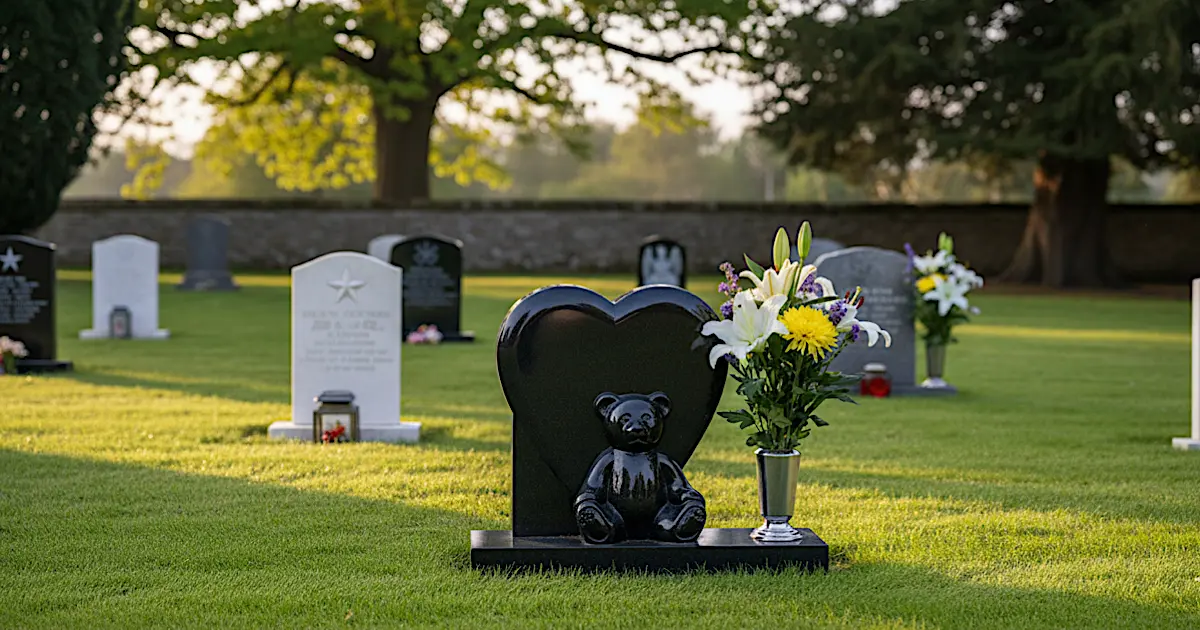
Children’s memorials often feature soft, gentle motifs. Teddy bears, stars, angels, hearts, doves, and castles are all popular. In our Children’s Memorials brochure we show examples ranging from simple granite headstones with a carved teddy bear to more elaborate book designs with a star-engraved plaque. Families sometimes bring us a child’s drawing, which we can engrave onto the stone. This creates a deeply personal touch that reflects the child’s life and personality.
Sebastian explains: “For many families, adding something personal, like a drawing or a favourite symbol, helps them feel they have captured their child’s spirit. It does not need to be large or elaborate, even a small carving can mean the world.”
Material and finish considerations
Granite is the most common choice for children’s memorials because it is durable, available in different colours, and can be polished or left with a softer honed finish. In council cemeteries, polished granite with coloured artwork is usually acceptable. In churchyards, however, natural finishes and local UK stones such as Yorkstone or slate may be required. The Diocese of Lincoln guidance prefers matt finishes, discourages bright colours, and generally restricts photo plaques or figurative designs.
Tip: If the chosen resting place is a churchyard, be prepared for simpler finishes. We can always suggest subtle designs that comply while still holding deep meaning.
Inscriptions and wording
Finding the right words can feel overwhelming. Short, simple inscriptions often feel most fitting. Examples include phrases like “Forever loved, forever young” or “Our little star”. Families can also include gentle symbols alongside text. Our inscription service provides proofs showing how the lettering will look on the stone. We offer a range of styles and finishes, from cut and painted letters to gilding in gold leaf.
Mario often reassures families: “There is no right or wrong. Sometimes just a name and a date feel enough. Other times a line from a lullaby or storybook brings comfort. We help families see different options before they decide.”
Safety and fixing standards
Another common concern is safety. Parents want reassurance that a memorial will be secure. All our memorials are fixed to the British Standard BS 8415 and in line with the National Association of Memorial Masons (NAMM) Code of Working Practice. We are fully accredited on the British Register of Accredited Memorial Masons (BRAMM), meaning every installation is carried out by qualified fixers. Families can be confident that their memorial is safe, insured, and compliant.
For further reading, the BRAMM register opens in a new tab explains these safety standards and why they matter.
Personal items and ornaments
Families often ask if toys, ornaments, or photo plaques can be placed on a child’s grave. The answer depends entirely on the rules of the burial ground. Many council cemeteries allow small ornaments or toys but may remove them after a set period. Churchyards are usually stricter and prefer only the memorial itself with fresh flowers in a vase. Where restrictions apply, we can suggest alternatives such as engraving a favourite toy or symbol into the stone.
Step-by-step support
The process can feel daunting. Our role is to take away as much of the stress as possible. This means:
- Listening carefully to your ideas and wishes.
- Checking all regulations with the burial authority or parish.
- Preparing design sketches and clear quotations.
- Submitting applications for permits on your behalf.
- Crafting the memorial in our workshop and keeping you updated.
- Installing the memorial safely and to the highest standard.
By handling every stage, we give families space to focus on remembrance rather than paperwork.
Real-world examples
- A family in Grimsby asked us to create a heart-shaped granite headstone with a carved teddy bear at the base. The cemetery allowed polished granite, so we added a small coloured star above the child’s name, reflecting a favourite bedtime song.
- In a Lincolnshire churchyard, another family requested a simple slate tablet. The regulations meant no colour or figurative design, so we suggested a small engraved dove above the inscription. This complied with the rules while still offering a personal symbol of peace.
Both families expressed relief that they had guidance at each step, avoiding unexpected refusals or delays.
Questions Often Asked About Children’s Memorials
How Soon After A Child’s Burial Can A Headstone Be Placed?
Most cemeteries recommend waiting at least six months to allow the ground to settle, though some suggest up to a year. This helps ensure the memorial will remain stable and secure.
Are Children’s Memorials Smaller Than Adult Ones?
Yes, many burial authorities set smaller size limits for children’s plots. The exact measurements vary, so we always confirm what is permitted at each site before any design work begins.
Can We Have Coloured Designs Or Photos On A Child’s Memorial?
Coloured motifs and photo plaques are usually allowed in council cemeteries, but most churchyards only permit natural stone finishes with simple engravings. We guide families through what is possible in their chosen location.
What Types Of Designs Are Common For Children’s Headstones?
Popular choices include teddy bears, stars, angels, hearts, and doves. Some families also choose book shapes, heart-shaped stones, or even engravings of a child’s own drawing for a personal touch.
Do We Need Permission Before Ordering A Memorial?
Yes, approval is required from the cemetery or churchyard before a memorial can be made and installed. We handle the application process for you, so everything is compliant with local rules.
What Happens If Rules Change After We Order?
Occasionally regulations are updated, but we always submit designs for approval before work begins. If an authority requests a change, we adjust the design while keeping the tribute’s meaning intact.
How Do I Choose The Right Inscription For A Child’s Memorial?
Short, gentle phrases often work best, such as “Forever loved” or “Our little star”. We provide proofs and examples to help families see how different wording will look on the stone.
